
I made all of the mistakes so you don’t have to.
“Do not despise these small beginnings, for the Lord rejoices to see the work begin.” Zechariah 4:10
I want to start this by expressing how inadequate I have felt making this blog. I know that basically every home cook has a YouTube channel, a blog, an IG with >100k followers, and are executing their brand at a much higher production value than I am. I am light years behind the trend and even if I give it my all, my knowledge will always be inferior to someone else. Nevertheless, I am doing this and leaving it in God’s hands.
Biryani. A dish that is irreplaceable among Desi households, yet relatively unknown in the Western world. When asking most Westerners, Americans in particular, if they like Indian/South Asian food, many people gush over how much they love it - but mostly just to the extent of Tikka Masala or Butter chicken with garlic naan. Maybe saag paneer if they’re vegetarian.
Biryani is one of the oldest dishes in South Asia, most historians believe this tradition came from ancient Persia, brought to the Indian subcontinent via the Mughal empire. Over centuries, each region developed its own distinct style. Today, it is one of the most beloved dishes in India, and you can find a different recipe in almost every household. It is such a point of contention that it has been said, “Indians debate biryani the way Italians debate pasta sauce.”
Of the dozens of regional styles, these are some of the most common: Hyderabadi, Lucknowi, Kolkata, Malabar, Ambur, and Sindhi.
This is not a dish that is an everyday staple, but it is a staple nonetheless. Because it takes so much time and is somewhat labor intensive, it is commonly made for weddings, holidays, celebrations, large family gatherings, and it is an honor to be the recipient of a box of leftover homemade biryani.
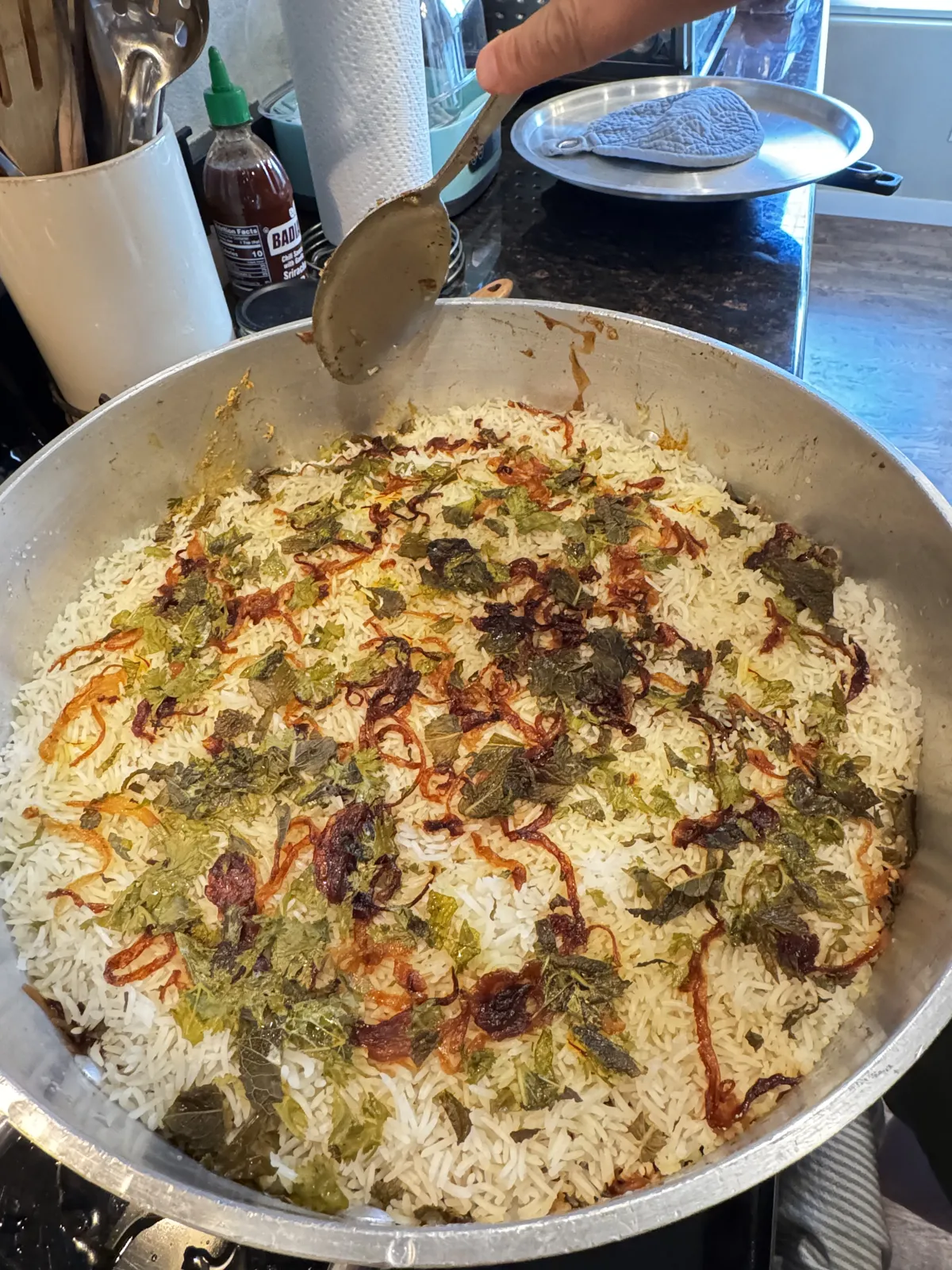
All this being said, Biryani is the most humbling dish I’ve ever made. I steer toward the Hyderabadi tradition of Chicken Dum Biryani which involves layering partially cooked rice with flavorful marinated chicken, fried onions, herbs, ghee, and saffron to make a brightly colored rice dish studded with flavor in every bite.
In theory, making this Biryani is a simple 5-step process:
fry onions
marinate chicken
par cook rice
layer ingredients
steam until fully cooked
But I am here to tell you it is anything but simple. Perfectly cooking the rice, chicken, aromatics, and spices, is a balancing act worthy of the olympics. At least for this home cook.
So here I am, a dozen biryanis in, ready to share with you what took me several attempts to understand:
bone in chicken matters
just like in almost every other dish, bone in chicken takes on more flavor and stays juicier, standing up to the spices, and falling apart when cooked correctly
undercooking the rice is key
almost every recipe tells you to cook the rice until it is 60-70% cooked - this does not work for me, I aim for ~30%
don’t be stingy
be generous with salt, spices, chicken, onions, and especially with who you share this with when you’re done
oil is your friend
I add a generous amount of oil to the pot before searing the chicken, and the chicken will release some of its fat as well - this is ideal, the oil is what carries the flavor throughout the rice
patience matters
it seems like this is something I have learned in every aspect of my life lately, but being patient and trusting the process seems to be key to a successful end product
I finally figured this out after several mediocre attempts - I screwed it all up along the way : mushy rice, undercooked rice, under salted and bland rice, dry chicken, etc. But I learned that biryani is something made out of love and passion, not technical brilliance or perfection. Every time I make it, I learn something new, and if there is one thing I have consistently taken from this dish, it’s patience.
From giving the chicken time to marinade, to letting the pot rest even after you think it should be done, lifting the lid to reveal fluffy, fragrant rice, and tender, flavorful chicken will always reward your patience.
Here is my take on Hyderabadi Chicken Dum Biryani. I don’t get too detailed with the ingredient amounts because I rarely use measurements for anything that I cook. I will say, being heavy handed on the spices will work out in your favor.
I hope you make it, and if it doesn’t work out the first time, I hope you try again because when it finally clicks, it is totally worth it.
Kara’s Notes
For me, the breakthrough wasn’t just about the rice—it was about understanding how moisture and fat work together.
The chicken releases flavorful juices. The yogurt loosens as it cooks. The rice carries just enough water from its par-cook. And the beautifully seasoned oil from cooking the chicken becomes the vehicle that carries those flavors into every grain.
If the rice is cooked too far before layering, all of that moisture turns it mushy. If it’s only about 30% cooked, it has room to absorb everything happening in the pot.
When you finally fluff the biryani, you’ll see exactly what you’re after: distinct grains of fragrant rice lightly coated in spiced oil, with incredibly tender chicken tucked underneath. That’s the moment I spent years chasing, and it’s why this dish has become one of my favorites to make.
https://karajonescooks.com/recipes/chicken-biryani/ · Recipe by Kara Jones Cooks