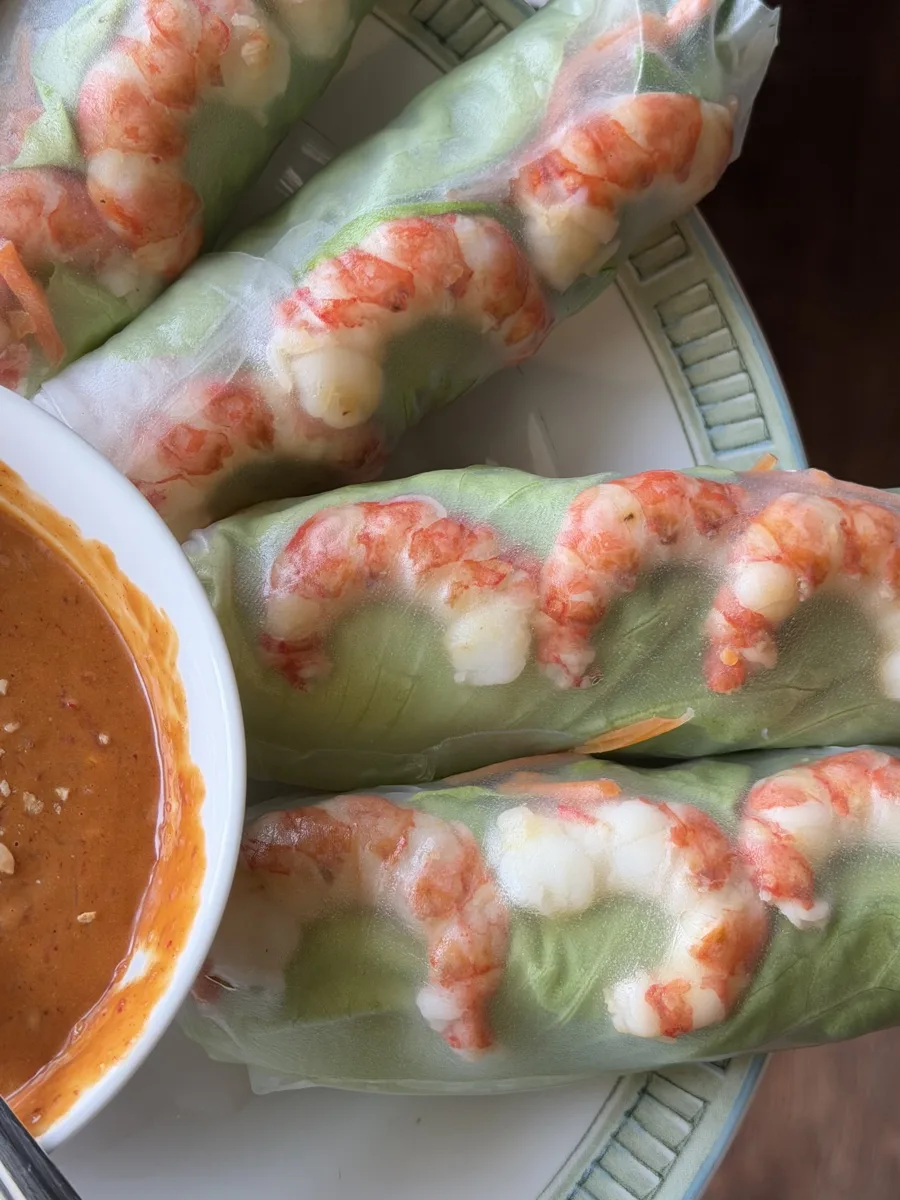
Wild-caught spot shrimp poached shell-on in a lemongrass-ginger broth, rolled tight with crisp vegetables and herbs, and dunked in a spicy peanut-hoisin sauce.
Disclosure: Made in partnership with Fisherman’s Pride.
Being born and raised here in landlocked Colorado, I didn’t grow up eating a lot of seafood. In my 20s I worked for a restaurant that specialized in it, and my eyes were opened to a whole new culinary world. Even so, I was still afraid to experiment with it myself.
Fast forward to now: I’m much more willing to take a high quality (and even expensive) piece of fish and put my flair on it. And I know I’m not the only one who has been intimidated by seafood, especially when it costs as much as a Prime Ribeye.
So this is The 20-Minute Catch, made with wild-caught Alaskan seafood from my local partner, Fisherman’s Pride. Not every recipe will take exactly 20 minutes, but each one takes something you may have been intimidated by and makes it incredibly accessible.
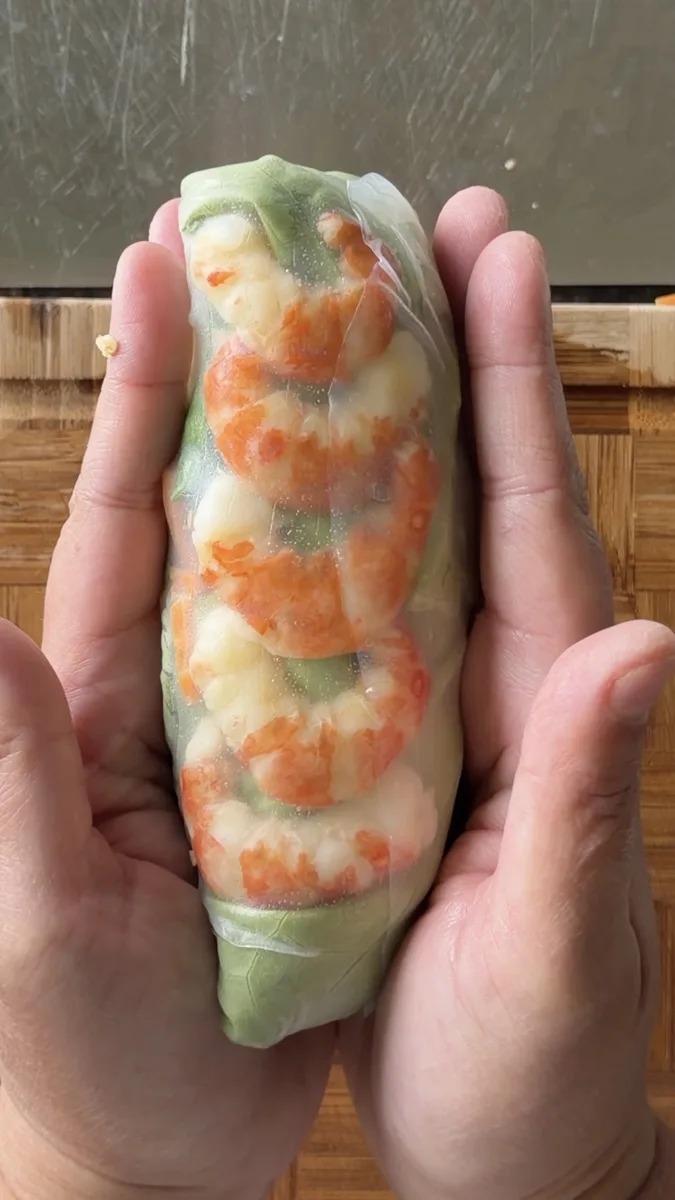
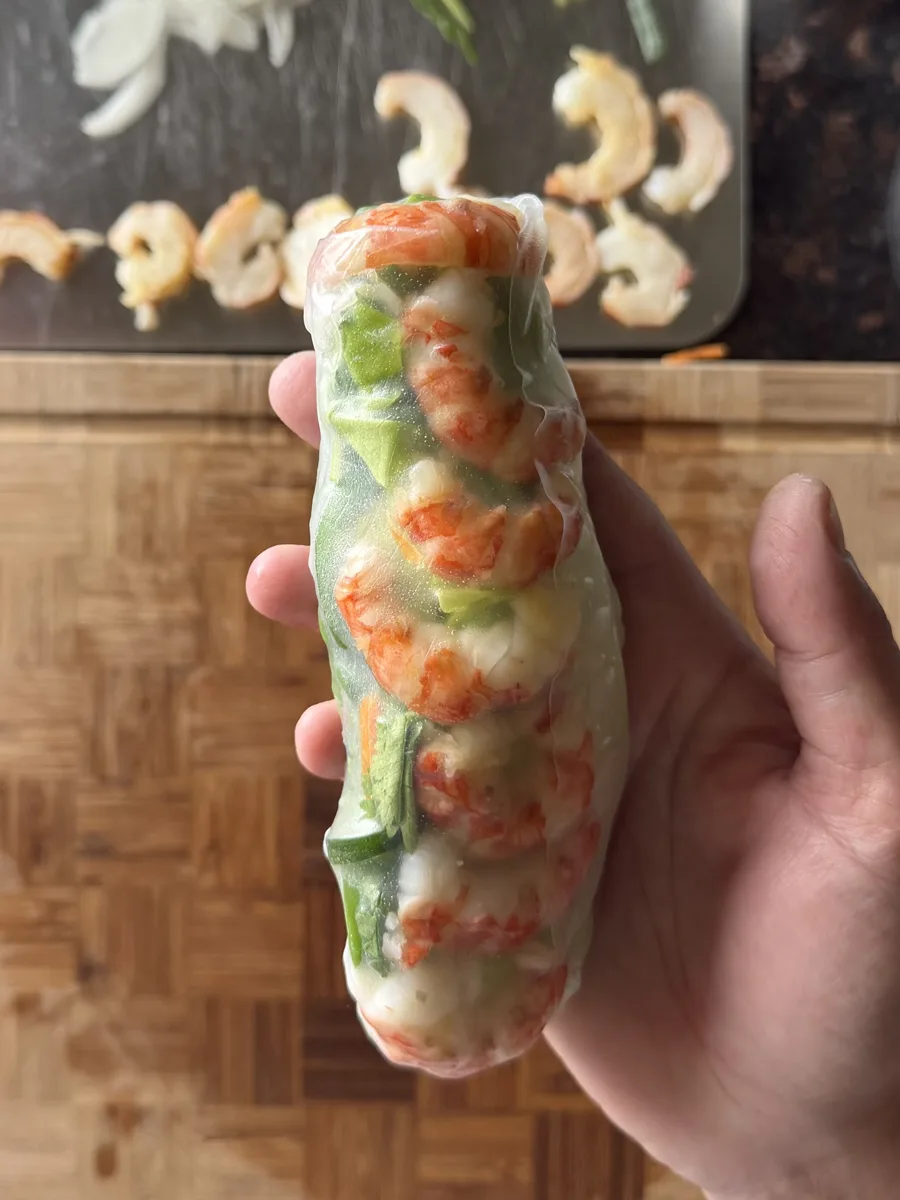
The first catch: spot shrimp poached in a lemongrass-ginger broth with their shells on, shocked cold, then sliced and rolled so that orange-red line shows right through the wrapper. That shrimp line down the middle is the whole roll, honestly. Everything else is just what you like and what you have.
½ cup fresh green nira (garlic chives), cut into 4-inch lengths
These are the fillings I used, but mix and match. Fresh mint, Thai basil, thinly sliced bell peppers, red cabbage, avocado or scallions would all be great. No need to track down garlic chives if you can’t find them.
For the Spicy Peanut-Hoisin Sauce
¼ cup creamy peanut butter
3 tbsp hoisin sauce
1 tbsp tamari or soy sauce
1 tbsp fresh lime juice
1–2 tsp rice vinegar
1 tsp freshly grated ginger
1 small garlic clove, finely grated
1–2 tsp homemade chili garlic sauce or Huy Fong chili garlic sauce, plus more to taste
3–5 tbsp warm water, as needed to thin
Optional garnish: crushed roasted peanuts, sliced green onions and additional chili garlic sauce.
Thaw the shrimp: If your shrimp are frozen, seal them in a leakproof bag and submerge in cold water for 15–30 minutes, or thaw overnight in the fridge. Leave the shells on. That’s the trick: the shells protect the meat while it cooks and keep it sweet.
Make the poaching liquid: In a medium saucepan, combine the water, kosher salt, ginger, lime and lemongrass, if using. Bring to a gentle simmer over medium heat and let the aromatics infuse for about 5 minutes. Then turn it down until it’s steaming but barely bubbling, 175–185°F. You don’t want a rolling boil.
Poach the shrimp: Add the thawed, shell-on shrimp and poach gently for 2–4 minutes, depending on size. Check early, because overcooked shrimp is the only real way to mess this up. The shells should turn pinkish-red, the flesh opaque, and the shrimp should hit 145°F inside. Get them straight into an ice bath to stop the cooking. Once cooled, drain well and peel off the shells and tails. Slice each shrimp in half lengthwise along its back. That flat cut lets you lay them in a neat row and lets the color show through the wrapper. Refrigerate until you’re ready to assemble.
Cook the noodles: Cook the rice vermicelli according to the package instructions until tender. Drain and rinse under cold running water to stop the cooking and wash off excess starch. Drain well and set aside.
Prep your fillings: Wash and dry the butter lettuce and herbs. Cut your vegetables into thin strips so they roll without fighting you. Lay everything out within reach before you start assembling. Once the rice paper is wet, you’re on the clock. Something crunchy, something fresh, something aromatic: that’s a good roll.
Make the sauce: In a medium bowl, whisk together the peanut butter, hoisin, tamari, lime juice, rice vinegar, ginger, garlic and chili garlic sauce. Add warm water one tablespoon at a time, whisking until smooth, creamy and pourable. Taste it. More chili garlic sauce for heat, more lime juice or rice vinegar for brightness, more hoisin for sweetness. Transfer to a serving bowl and garnish with crushed peanuts, green onions and more chili sauce if you want.
Roll: Fill a large, shallow dish or pie plate with room-temperature water. Working one wrapper at a time, dip it for 5–10 seconds, just until pliable but still slightly firm. It keeps softening as you work. Place it on a clean, lightly dampened work surface. On the lower third, arrange a butter lettuce leaf, a small handful of noodles, and your vegetables and herbs. Place several shrimp halves in a neat row just above the filling, colorful outer sides facing down against the rice paper. Fold the bottom edge snugly over the filling and roll forward once, fold in both sides, then keep rolling firmly but gently over the shrimp until sealed. Repeat with the rest. Don’t overfill: a snug roll holds together better, shows off the colors and is easier to eat. Your first roll will look rough. Your third will look like the photo.
Serve: Arrange the rolls on a platter with a little space between them so they don’t stick. Serve whole or sliced diagonally with a sharp, lightly dampened knife. Eat right away, with plenty of spicy peanut-hoisin sauce.
Kara’s Notes
Why poach with the shells on? The shells protect the meat while it cooks, so it stays moist and sweet. Peel after, not before.
Customize your fillings: Shrimp, lettuce and rice noodles are the foundation. Everything else is what you love, what’s in season, or what’s already in your fridge. You don’t need every ingredient on the list to make good spring rolls.
Make it spicier: More chili garlic sauce in the dip, or extra jalapeño inside the rolls.
Garlic chives: Green nira are garlic chives: mild, garlicky, a little grassy. Lovely here, but not worth a special trip. Regular chives or thinly sliced scallion greens do the job.
Make ahead: The vegetables, noodles, shrimp and sauce can all be prepped ahead and refrigerated separately. Assemble as close to serving time as you can, since that’s when the texture is best.
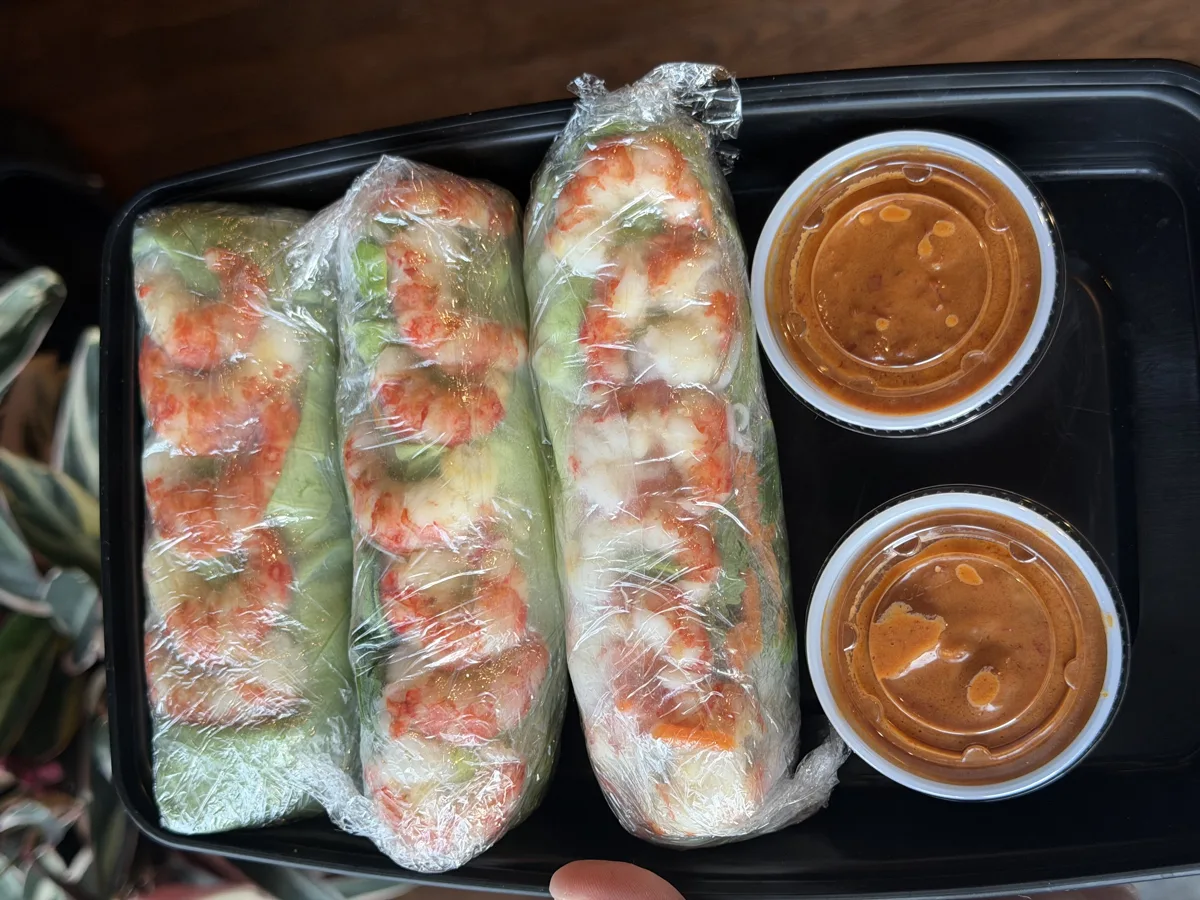
Storage: Best the day they’re made. If you want them to stay decent, wrap each roll individually in plastic wrap. Otherwise they stick together, break and are just generally terrible. If storing briefly, keep them in a single layer in an airtight container with a lightly damp paper towel and refrigerate promptly.
Gluten-free option: Use certified gluten-free rice paper, rice noodles, tamari and hoisin sauce. Check the chili garlic sauce label too.
https://karajonescooks.com/recipes/alaskan-spot-shrimp-spring-rolls/ · Recipe by Kara Jones Cooks